

Cycling route from Málaga to Marbella
2-day bikepacking cycling route through Málaga’s countryside to Marbella’s luxury areas and beaches
185km 2495hm
Marbella combines a well-known luxury scene – marinas, restaurants, and long waterfront avenues – with a quieter Andalusian side found in its whitewashed streets, small plazas, and traces of Roman and Arab history. The town sits between the sea and the mountains, and this mix of coastal setting and inland heritage gives it a character that appeals to many travellers. For this reason, Marbella can also work well as a destination for a short bikepacking trip, especially when approached through rural routes rather than the main coastal road.
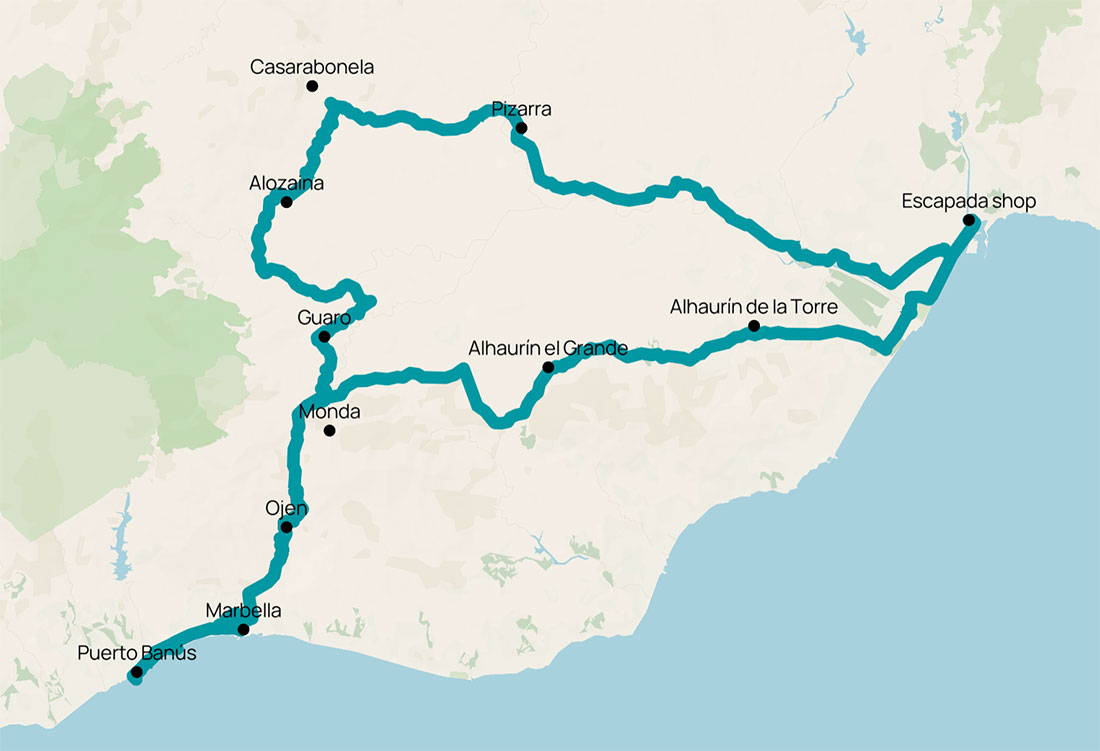
The two-day format allows time to enjoy the countryside, pass through several small Andalusian villages, and arrive in Marbella with enough time to explore different parts of the town. Instead of following the coastal stretch – which becomes busy and less suitable for cycling after Fuengirola – the route heads inland. It crosses quiet farmland, follows the edges of the Guadalhorce Valley, and passes through villages such as Pizarra, Alozaina, Guaro, and Ojén.
On the first day, the route crosses one side of the Guadalhorce Valley and continues through rural roads with gradual climbs toward the hills above Marbella. The second day follows the opposite side of the valley, creating a natural loop and giving the route a different landscape on the second day.
Route description
Our cycling route to Marbella avoids the coastal area, where there is more traffic and less interest for the cyclist. The first day takes you across the inland landscapes west of Málaga, following the northern edge of the Guadalhorce Valley – one of the most characteristic agricultural areas of the province. The valley is shaped by agricultural land, fruit trees, citrus groves and low mountain silhouettes that frame the route before the terrain becomes more mountainous. As the route continues, you pass a series of small towns and villages, each with its own atmosphere and typical features of inland Málaga.
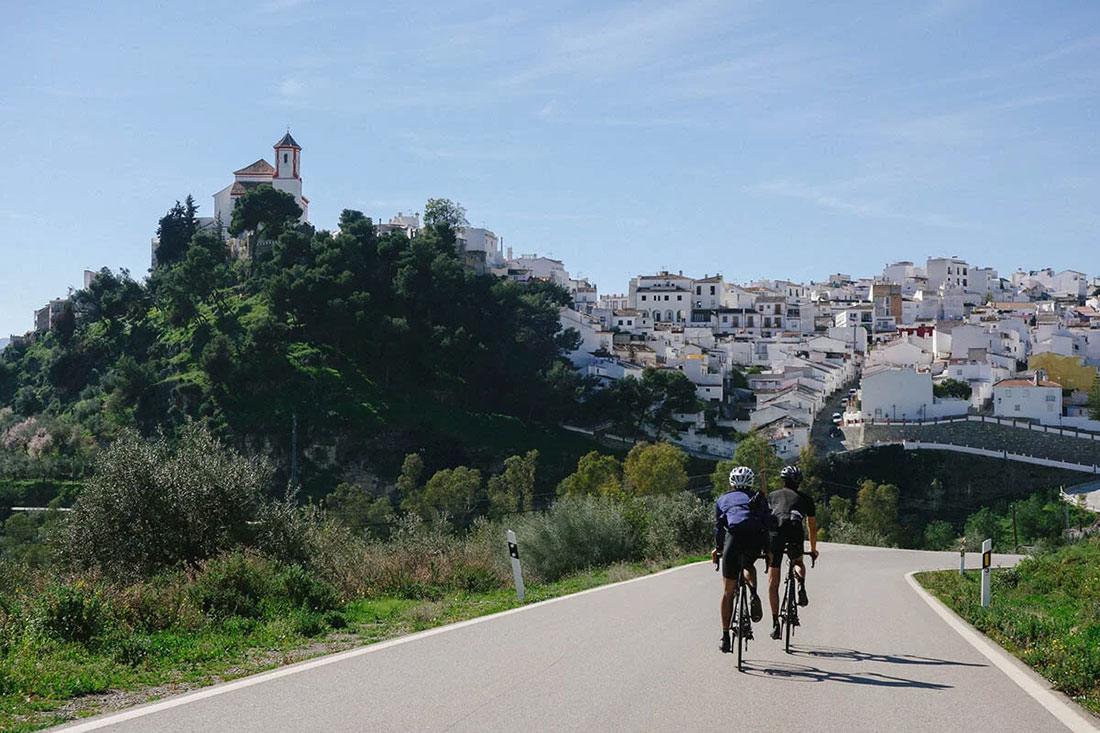
Pizarra
A quiet town at the heart of the Guadalhorce Valley, surrounded by farmland and low hills. It forms a natural transition from the flatter valley areas to the more mountainous terrain ahead.
Casarabonela
A village on the slopes of the Sierra de las Nieves, with whitewashed houses, narrow streets and wide views over the valley. Its elevated position marks the beginning of the more noticeable climbing of the day.
Alozaina
Alozaina is the best place to stop. It is located halfway, and considering that the last climb is still waiting for us, it won’t harm to rest a little before the last effort. There is a water source at the beginning of the town, and there are several cafeterias where you can fill your water bottles or have a snack.
Guaro
A small white village surrounded by olive groves and gentle hills. Guaro offers a quiet stop between Alozaina and Monda, with a traditional Andalusian feel and views toward the Sierra de las Nieves.
Monda
A small inland town known for its castle and views of the surrounding sierras. Passing through Monda, the terrain becomes more rugged and scenic, and you begin approaching the last mountain ridges before Marbella.
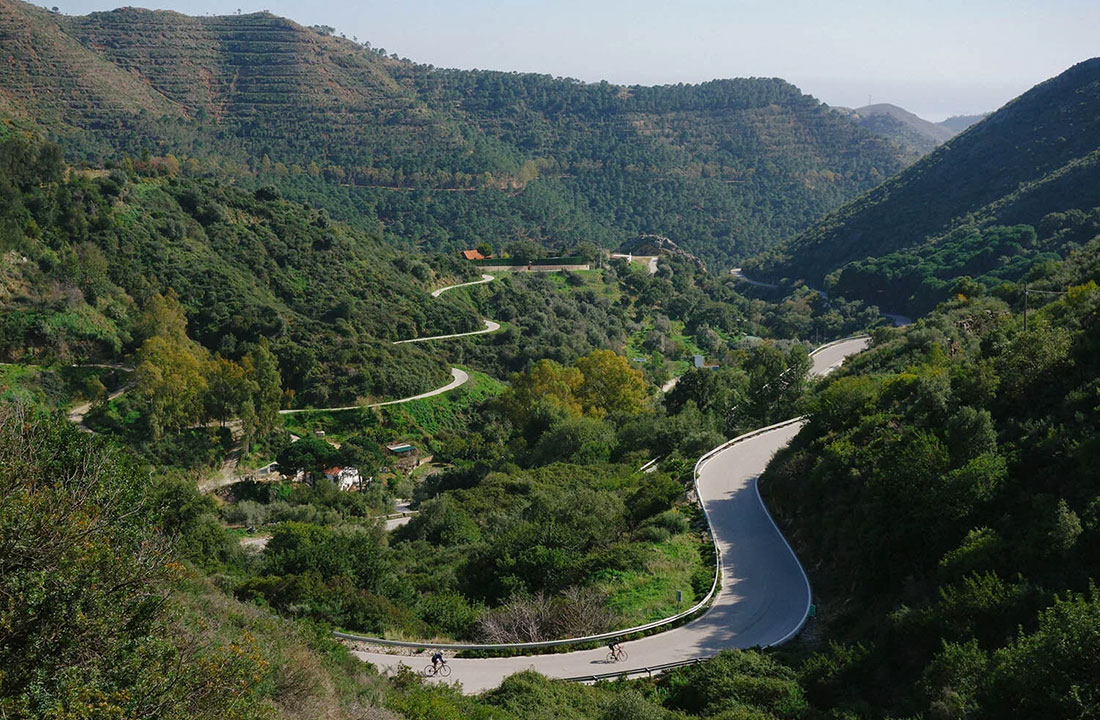
When reaching the top of the last climb, we will find the first detour to Ojén through the A-7103. This path takes you to a zigzagging road known as “Los Caracolillos” (a snail-shaped road) that offers better views and the chance of taking memorable photos. Finally, we will only have to ride down the way to Marbella.
Ojén
The final village before reaching the coast. Ojén sits in a deep valley between mountains, close to Marbella but very different in character – quieter, greener and more rural. From here, the last descent begins.
After leaving Ojén, the route drops steadily toward the sea, entering Marbella from the northern side. The arrival is smooth, with mountain views behind you and the coastline ahead.
As a point of interest, the route from Pizarra to Marbella was part of one of the first stages of the 2017 edition of La Vuelta a España.
Marbella
Marbella is often associated with its modern coastal life – marinas, waterfront avenues and a lively restaurant scene – yet beneath this surface lies a town shaped by centuries of history. That contrast becomes especially clear in the old town, where whitewashed streets, small shaded plazas and remnants of Roman and Arab pasts reveal a quieter, more traditional Andalusian character.
Set between the Mediterranean and the inland mountains, Marbella carries both coastal openness and historical depth. Moving from the seaside promenades into the Casco Antiguo feels like stepping into another rhythm: narrow streets, traditional architecture and a sense of continuity that reflects the many layers of the town’s past. This balance between old and new gives Marbella a distinct identity – one that travellers often appreciate most when they arrive slowly, by bike.
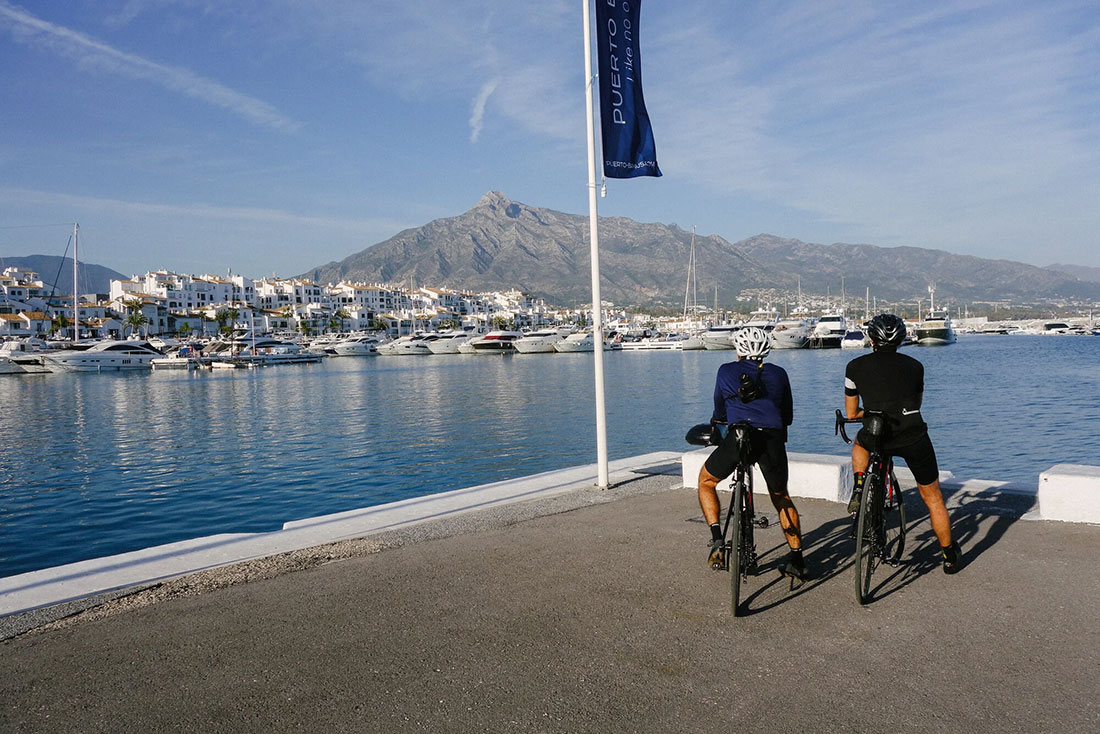
Puerto Banús
Just beyond Marbella lies the well-known Puerto Banús. This area is defined by its waterfront promenade, yachts, restaurants, luxury shops, and a lively atmosphere.
Return Route
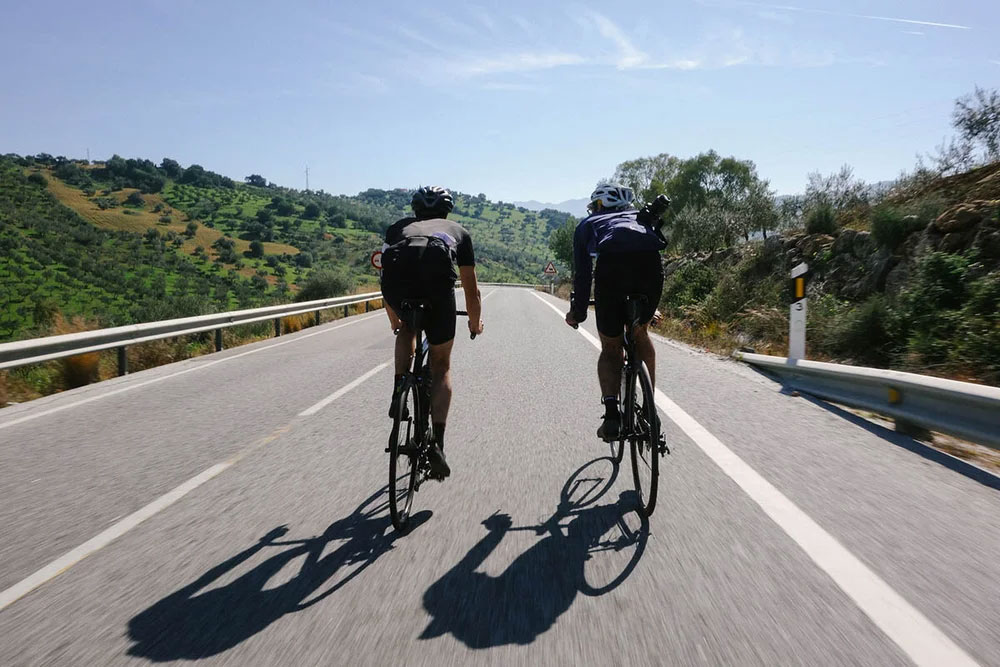
If Ojén or Monda were skipped on the way to Marbella, they can be easily included on the return. After Monda, a shorter connection leads back toward Málaga.
Once the mountain section around Marbella, Ojén, and Monda is behind you, the landscape gradually changes to a more populated side of inland Málaga. The rugged terrain gives way to rolling agricultural and semi-urban countryside on the opposite side of the Guadalhorce Valley. This is a more lived-in landscape, with farms, plantations, scattered houses, and small industrial areas. Along this stretch, several traditional ventas can be found, suitable for a simple and local meal.
The route passes through Alhaurín el Grande, one of the more active towns in this part of the province and a practical place for a short pause if needed. Further on, the route skirts Alhaurín de la Torre, which remains on the right-hand side along the lower slopes of the Sierra de Mijas. From here, the road gradually leads back toward Málaga.
This route was previously published as a road bike route on our old Escapada website. We updated the content to reflect our new Travel & Adventure concept while keeping the same region and key highlights.
Created by the Escapada Cycling team